ASTM F15 for Kovar: What the Specification Actually Controls
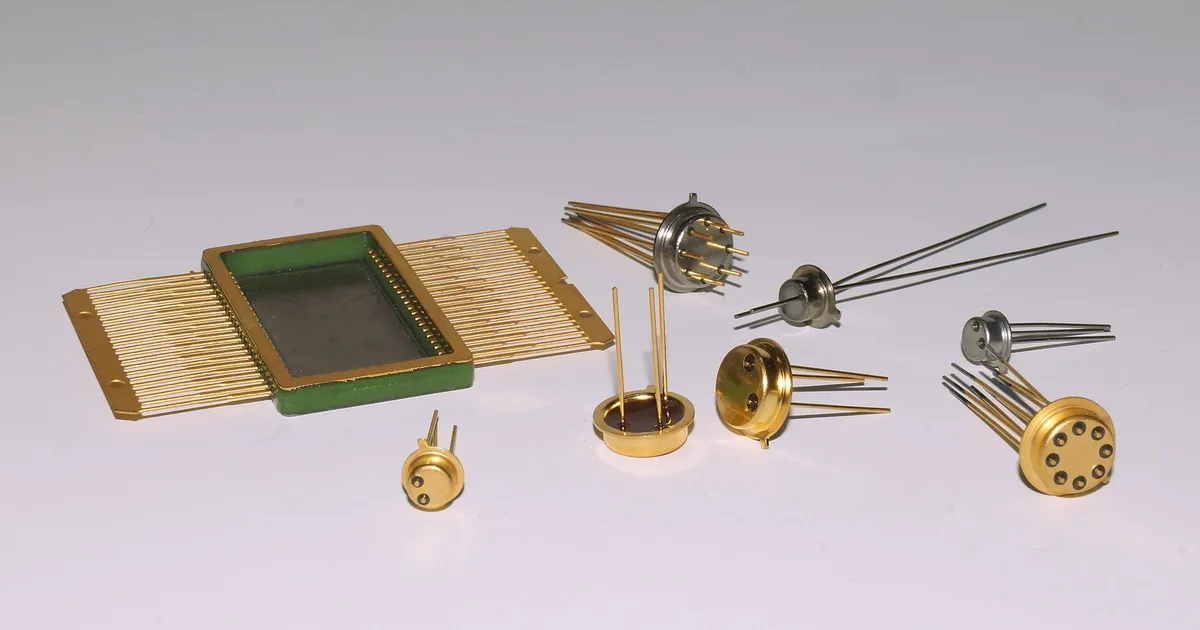
Kovar is the metal behind a great many hermetic electronic packages, vacuum feedthroughs and glass sealed sensors. Its job is to expand and contract at nearly the same rate as hard glass and alumina ceramic, so that a seal between them survives heating and cooling. ASTM F15 is the specification that makes that behavior predictable from one heat of metal to the next. This guide explains what the standard is for, what it controls and what stays your responsibility. It does not reproduce the standard, and you should read the current edition before ordering.
What ASTM F15 is
ASTM F15 is the Standard Specification for Iron-Nickel-Cobalt Sealing Alloy. It describes an alloy of roughly 29 percent nickel, 17 percent cobalt and the remainder iron, with small controlled amounts of other elements. The best known trade name for it is Kovar, although other producers sell the same composition under their own names.
The word sealing in the title matters. The alloy is made for sealing to glass and ceramic, and the specification focuses on the properties that decide whether a seal works. That is why thermal expansion over specified temperature ranges is central, and why chemistry limits are tight.
What the standard typically controls
The standard covers a short list of items, and the exact limits come from the current edition.
| Control | Why it matters to a seal |
|---|---|
| Chemical composition | Nickel and cobalt set the expansion curve. Small shifts move the CTE |
| Thermal expansion | Mean CTE over defined ranges must stay within limits so glass and metal stay matched |
| Product forms | Strip, sheet, bar, rod, wire and tube, each with notes on manufacture |
| Condition | Supply condition, typically annealed for forming and machining |
| Grain size and surface | Some producers and users also check grain size and surface quality for drawn and formed parts |
| Dimensions and tolerances | Per product form, or by reference to another document |
| Certification | Test results and heat number on the certificate |
Table shows categories, not limits. Read the current edition for numbers.
The two numbers that drive a good seal are the nickel and cobalt contents. A shift of a fraction of a percent in nickel changes the expansion curve and the temperature at which the alloy changes slope. For a glass seal, that change can show up as strain in the glass.
Expansion ranges and why more than one
Kovar does not have one CTE. It has a curve. Over most of the working range the curve is nearly flat, and then it bends upward at higher temperature. A seal is made at the glass sealing temperature and cooled through the glass transition, so the metal needs to follow the glass over the whole path.
Typical mean CTE values for Kovar, approximate and for orientation only:
| Temperature range | Typical mean CTE (×10⁻⁶ per K) | What it relates to |
|---|---|---|
| 30 to 200 °C | about 5.0 to 5.5 | Service temperature of most electronic parts |
| 30 to 300 °C | about 4.9 to 5.5 | Mid range, relevant to soldering and brazing |
| 30 to 450 °C | about 5.0 to 5.6 | Close to the glass setting range |
Typical handbook values. Confirm with the certificate and the current edition.
The standard sets limits for a few ranges like these. A certificate that shows only one range does not prove the others, so ask which ranges the producer tested. This is the same issue that comes up with Invar, where a mean over 20 to 100 °C and one over 20 to 300 °C describe the same metal differently. Measuring the CTE of Invar with a dilatometer covers how those numbers are produced.
What is outside the standard
ASTM F15 covers the metal. A finished sealed part depends on several things the standard does not control.
- The glass. Its own expansion and its working range must match the Kovar. Glass choice comes from the seal designer.
- Heat treatment for sealing. Kovar parts typically go through a high temperature anneal in a hydrogen-bearing atmosphere and a controlled oxidation before glass sealing. The cycle comes from the seal process, not from F15.
- Plating. Nickel and gold layers have their own standards. See Kovar plating for hermetic sealing.
- Machining stress. Cutting adds stress that a standard cannot predict, and annealing is often needed afterward.
- Seal design. Wall thickness, glass length and pin geometry decide stress in the seal.
A buyer who orders “Kovar per ASTM F15” has bought the alloy. The seal still has to be designed and made correctly, and Kovar glass-to-metal seal parts covers the part-making side.
Machining notes for F15 stock
Kovar cuts like a tough, gummy nickel alloy. It work hardens, produces long chips and wears tools faster than Invar because of its cobalt content. Typical practices:
- Use sharp, positive geometry tools and keep feeds up so the tool cuts instead of rubbing.
- Flood coolant, since heat stays in the cut.
- Leave stock for anneal and finish passes after any heavy machining.
- Deburr carefully, because burrs break off into seals and bonding faces. See deburring Invar without residual stress for methods that carry over.
- Keep parts clean and handle with gloves, since oil and finger residues spoil glass bonding.
Alloy 42, a related alloy used for lead frames, has similar machining behavior, described in Alloy 42 machining for lead frames.
Hypothetical worked example
A buyer orders Kovar tube to make 500 feedthrough bodies for a sensor package. The purchase order reads “Kovar tube, ASTM F15, annealed, MTR with chemistry and mean CTE 30 to 300 °C and 30 to 450 °C.” The numbers below are hypothetical.
- The certificate shows nickel at 29.1 percent and cobalt at 17.0 percent, both in the middle of the allowed band.
- Mean CTE is 5.1 ×10⁻⁶ per K for 30 to 300 °C and 5.3 for 30 to 450 °C.
- Before volume machining, the buyer asks the shop to make three test bodies and send them to the sealing house for a bead seal test on this heat.
- The sealing house reports no visible strain in the glass and a pass on helium leak test.
The extra test costs a few days and a few parts. A cracked seal found after 500 bodies are sealed would cost much more. For a critical part, a seal test on a sample of the heat is cheap insurance, and a request the shop can pass to the sealing house.
Reading a Kovar certificate
A mill test report for Kovar should show the same kind of information as one for Invar, with cobalt added to the chemistry. Check these lines:
| Line | What to confirm |
|---|---|
| Heat or lot number | Matches the marking on the material and carries through to your traveler |
| Chemistry | Nickel, cobalt, iron balance and every residual element the standard lists |
| Mean CTE | Each range stated with the value and the method |
| Condition | Annealed or as ordered |
| Form and size | Matches the order, with measured dimensions if requested |
| Standard and edition | Matches the purchase order |
If any line is missing, ask the supplier before cutting. A certificate with chemistry but no CTE might still be acceptable for a non-sealing part, but not for a seal. The checks in Invar material certification apply here as well.
Problems that show up at incoming inspection
Shops that handle Kovar regularly look for a short list of faults before they cut.
- Surface oxide or discoloration. A dull, tinted surface can mean a poor anneal or storage in humid air. It may not matter for a part that will be cleaned and annealed, but it matters for one that will be plated as received.
- Pits and inclusions. Small surface defects can open up as leaks in a thin wall that is later sealed.
- Bow in bar and strip. Drawn Kovar can carry residual stress that makes a bar spring when material is removed on one side.
- Mixed heats. Two heats in one bundle with different CTE are rare but costly if the parts are mixed in a seal assembly.
- Magnetic response. Kovar is magnetic, and the response changes with cold work. A magnet check is crude but can flag unexpected material.
Each of these is a reason to keep heat traceability from the bar through to the shipped part. A shop that tags every part with its heat number can trace a seal failure back to a lot, which is the main reason hermetic buyers insist on it.
How F15 relates to the other low-expansion standards
Buyers often mix three standards that sound alike. They cover different metals for different jobs.
| Standard | Alloys covered | Typical job |
|---|---|---|
| ASTM F15 | Iron-nickel-cobalt sealing alloy (Kovar type) | Hard glass and ceramic seals, hermetic packages |
| ASTM F30 | Iron-nickel sealing alloys such as Alloy 42, 46, 48 and 52 | Lead frames, glass seals to softer glasses |
| ASTM F1684 | Low-expansion iron-nickel and iron-nickel-cobalt alloys such as Invar 36 | Precision structures, tooling, reference parts |
Invar 36 is not a sealing alloy and Kovar is not a stability alloy, even though both have low expansion. A buyer who wants a very stable bench should not choose Kovar for being “low expansion”, and one who needs a glass seal should not choose Invar. The comparison guide Invar 36 vs Kovar vs Super Invar explains the difference in use, and ASTM F1684 explained covers the other standard.
How to write the order
- Name ASTM F15 and the edition year.
- State the form, size and tolerance.
- State the condition: annealed or as needed for the process.
- Ask for a certificate with heat number, chemistry and CTE with the ranges stated.
- Say whether a sample seal test or a bead seal check on the heat is needed.
- Keep heat treatment, plating and sealing steps on the drawing, in their order.
If the drawing calls for a different alloy such as Alloy 42 or Alloy 48, the matching specification is different. Alloy 39, 42, 46 and 48 controlled-expansion grades compares them with Kovar.
Substituting grades
A supplier who cannot get Kovar quickly may offer a substitute. Treat that as an engineering change and not a procurement convenience. Alloys with similar expansion at one temperature can differ over the sealing range, and the glass choice, the sealing cycle and the plating were tuned to the alloy on the drawing. Ask for the datasheet of the substitute, the CTE curve over the full range and a bead seal test or a sample seal before approving the change. If the answer is a delay, a short delay is almost always cheaper than a lot of sealed parts that fail leak testing.
Checklist before you order
- Standard and edition written on the order
- Form, size, tolerance and condition stated
- CTE ranges listed on the certificate request
- Sample seal test agreed for critical parts
- Heat treatment, plating and sealing steps listed on the drawing
Send the drawing through the RFQ form and we match you with shops that machine Kovar and understand seal parts. For handbook values see the Kovar machining page and the Invar reference data.
See also: ASTM F15 for Kovar sealing alloy, the reference page with the expansion bands and status.
Frequently asked questions
Is Kovar the same as ASTM F15?
Kovar is a trade name for an iron-nickel-cobalt alloy of about 29 percent nickel and 17 percent cobalt. ASTM F15 is the specification that describes that alloy and what a supplier must deliver. Other producers sell the same composition under different names, and a purchase order that cites ASTM F15 removes ambiguity about what is being bought.
What temperature range does ASTM F15 use for expansion?
The standard sets limits on mean expansion over defined ranges that start near room temperature and end at several hundred degrees Celsius, chosen to cover glass sealing and cool-down. The exact ranges and limits are in the current edition, so read it before writing the order. A certificate should state the range and the value, not just a single number.
Does ASTM F15 cover plating or heat treatment for sealing?
No. It covers the alloy as supplied. Hydrogen anneal, oxidation for glass bonding, plating and sealing are separate steps on your drawing or in a process specification. The standard does not tell you how to make the seal, only that the metal will behave in a predictable way when you do.
Reviewed against
- ASTM F15, Standard Specification for Iron-Nickel-Cobalt Sealing Alloy
- Wikipedia, Kovar
Values in this guide are typical handbook figures for planning. The mill certificate for your heat lot and the shop's quote for your geometry govern.
Need a quote for this part?
Send the drawing. We match you with up to 3 shops that machine Invar and reply within 24 business hours.
Get matched with an Invar shopKeep reading
- Machining Kovar for Glass to Metal Seals: What the Seal Needs · Materials
- Machining Alloy 42 (ASTM F30): Thin Parts, Flatness and Alloy Choice · Materials
- Invar 36 vs Kovar vs Super Invar: Which Alloy for Your Part · Materials
- Invar Mill Certifications: What a Certified Material Report Should Show · Choosing a Supplier