Alloy 39, 42, 46 and 48: Controlled-Expansion Grades Compared
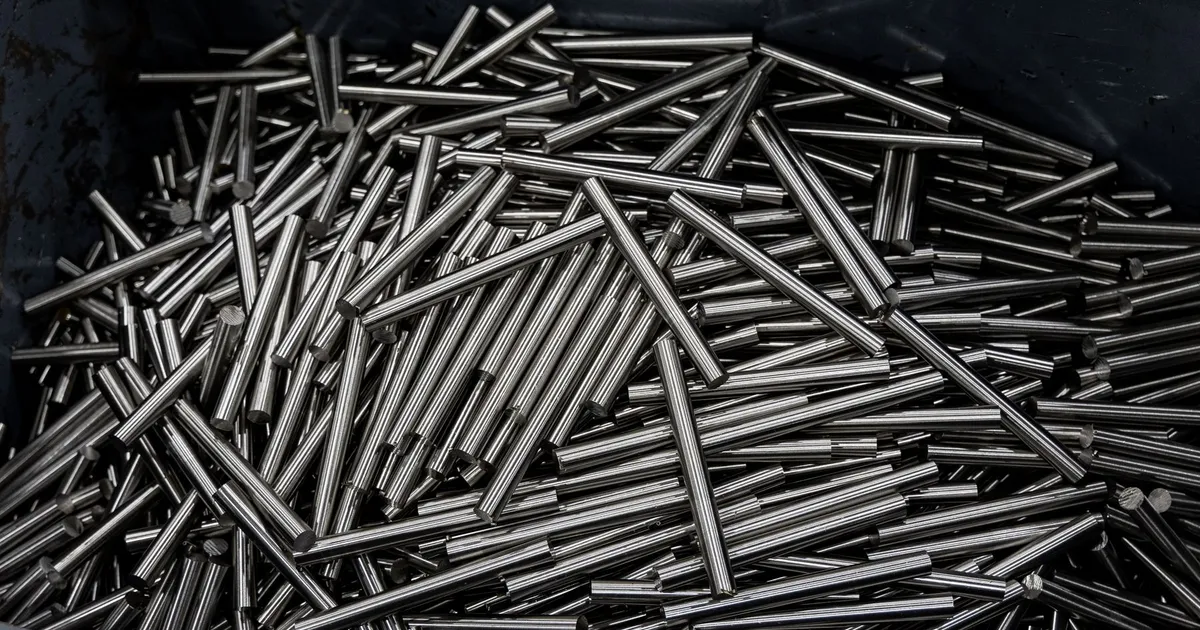
Invar 36 gets most of the attention in this family, but it is only one member. Move the nickel content up a few points and the alloy no longer sits at the bottom of the expansion curve. It lands instead at a value that matches a glass, a ceramic or a semiconductor. These are the controlled-expansion or sealing alloys, and the names Alloy 39, 42, 46 and 48 refer to their nickel content. This guide compares them with Invar 36 and Kovar and explains how buyers choose between them.
What controlled expansion means
A controlled-expansion alloy is one whose CTE is set on purpose, not left as whatever iron or aluminum would give. In the iron-nickel system the CTE falls as nickel rises from zero to about 36 percent, bottoms out at Invar and then climbs again with more nickel. That behavior lets metallurgists tune the alloy to match another material.
Matching matters because a seal between two materials is only as good as the mismatch it can tolerate. If a metal and a glass grow at different rates, the temperature swing during sealing and later use puts stress into the joint. A mismatch of even a part per million can crack glass over a large seal. The aim is therefore not minimum expansion but equal expansion, within a narrow band over the working temperature range.
The grades side by side
The values below are typical and approximate. Datasheets from different producers differ slightly, and trade names vary.
| Grade | Nominal nickel | Typical mean CTE, 20 to 300 °C (×10⁻⁶ per K) | Typical match or use |
|---|---|---|---|
| Invar 36 | 36% | about 5 (about 1.3 near room temperature) | Dimensional stability, tooling, optics |
| Alloy 39 | 39% | roughly 4 to 5 | Seals to certain low-expansion glasses |
| Alloy 42 | 42% | roughly 4.5 to 5.5 | IC lead frames, ceramic and glass seals |
| Kovar (29Ni, 17Co) | 29% plus 17% cobalt | roughly 5 to 5.5 | Hard borosilicate glass and alumina seals |
| Alloy 46 | 46% | roughly 7.5 to 8 | Seals to medium-expansion glasses |
| Alloy 48 | 48% | roughly 8 to 9 | Seals to soft glasses and some ceramics |
| Alloy 52 | 50 to 52% | roughly 10 to 11 | Seals to soda-lime and lead glasses |
Typical approximate values for orientation only. Confirm against the datasheet and ASTM F30 or F15 for the grade you will buy.
Two points deserve emphasis. First, the mean CTE of Invar 36 over 20 to 300 °C is much higher than its room temperature value, because the curve bends upward near its Curie temperature. Compare grades only over the same window. Second, Kovar carries cobalt, which shifts its curve flat to about 450 °C and makes it the usual pick for sealing hard glass.
Why different grades exist
Each alloy matches a family of materials:
- Hard borosilicate glass and alumina ceramic have low CTE, near 3 to 6 ×10⁻⁶ per K. Kovar and Alloy 42 sit in that range.
- Soft glasses such as soda-lime and lead glass expand faster, near 9 to 10. Alloy 48 and 52 match them.
- Mid-range glasses and ceramics fall between. Alloy 46 covers the middle.
- Silicon at 2.6 is lower still, which is one reason lead frames of Alloy 42 are paired with silicon dies through compliant attach layers.
A buyer rarely picks an alloy in isolation. The seal partner sets the target, and the alloy follows. Kovar glass-to-metal seal parts describes one case in detail.
Machining behavior across the family
From the machine shop’s view the grades are close cousins. They are all nickel-iron alloys that are soft, gummy and work hardening, with low thermal conductivity. The main differences are:
| Property | Trend with more nickel | Effect on machining |
|---|---|---|
| Hardness (annealed) | Similar, about 130 to 170 HV | Little change |
| Work hardening | Similar, strong | Light cuts, sharp tools |
| Thermal conductivity | Low, about 10 to 16 W/m·K | Heat stays in the cut |
| Magnetic behavior | Magnetic below Curie, varies with composition | Fixture and measurement notes |
| Cobalt content (Kovar only) | Higher strength, more abrasive | Tool wear |
The cutting parameters and techniques described for Invar in Invar 36 machining parameters carry over with small adjustments. The same sequence of rough, stress relieve, finish and stabilize applies when dimensional stability matters. For lead frames and stamped parts, Alloy 42 machining for lead frames covers the specifics.
Heat treatment is different from Invar
Buyers who know Invar sometimes expect the same cycle for every alloy in the family. It does not carry over. Invar parts get stress relief and a low temperature stabilization hold to keep their size. Sealing alloys are heat treated for a different reason: to prepare the surface and the metal for a glass or ceramic seal.
- Anneal. Seal parts are typically annealed at high temperature in a hydrogen-bearing atmosphere to soften the metal, remove carbon and clean the surface. The cycle depends on the grade and on the glass.
- Oxidation. For many glass seals a thin, controlled oxide layer forms on the metal before sealing, because the glass bonds to the oxide. Too little oxide gives a weak bond and too much dissolves in the glass and spoils it.
- Sealing. The glass is fused to the metal at a temperature set by the glass. After sealing, the assembly cools slowly through the glass transition so the stress stays low.
- Plating after sealing, if the design needs it, with the cautions given in the plating guide mentioned above.
A drawing for a seal part should therefore name the heat treatment, not just the alloy, and say which of these steps the shop supplies and which belong to the sealing house. When a shop machines parts that later go to a sealer, the shop needs to know the finish allowed on the faces, since a hydrogen anneal can change surface appearance and slight dimensions.
Supply and lead time
The grades differ a lot in how easy they are to buy. Invar 36 and Kovar are stocked in many forms by several mills and distributors. Alloy 42 is common in strip and sheet because of the lead frame market and less common as thick bar. Alloys 46 and 48 appear in bar and strip but in fewer sizes. Alloy 39 and 52 are the least common, and a small order can wait weeks for a heat.
| Grade | Typical supply picture | Planning note |
|---|---|---|
| Invar 36 | Bar, plate, sheet, wire from several sources | Standard stock sizes ship quickly |
| Kovar | Bar, plate, sheet, tube, strip | Wide availability, see Invar material sourcing guide |
| Alloy 42 | Strip and sheet widely, bar less so | Confirm bar sizes before drawing release |
| Alloy 46 and 48 | Strip and bar in limited sizes | Allow extra lead time |
| Alloy 39 and 52 | Specialty mill runs | Allow weeks, discuss minimums |
Typical supply picture. Ask the shop what it can source and at what minimum.
If a stock size does not fit your part, a larger bar costs more material and more machining time. Design to a standard size where you can. Ask for the material test report with chemistry and, where the alloy is bought for a seal, with a CTE check or a bead seal test on a sample of the heat.
Common mistakes when specifying these alloys
- Naming only the nickel number. “Alloy 42” is a family name, and the specification, the heat treatment and the form must follow it.
- Comparing grades at different temperature windows. A mean CTE from 20 to 100 °C and one from 20 to 300 °C are different numbers for the same alloy.
- Swapping grades on cost. Alloy 42 and Kovar differ in price, but the seal matching depends on the glass. A cheaper swap can crack a seal in testing weeks later.
- Forgetting the plating. A plating step adds a layer with its own expansion and can interfere with the seal, so decide it up front.
- Treating all of them as Invar. Stabilization at low temperature makes sense for a precision structure but has no effect on a seal alloy’s CTE match.
The right question is “what does this metal need to match, and over what range?” The grade then follows from the answer.
Choosing a grade, step by step
- Identify the mating material and find its mean CTE over the working temperature window, not just a single point.
- Pick the alloy whose curve matches over that window. Ask the seal or package designer for the proven pairing.
- Check the form you can buy: bar, plate, sheet, strip or tube. Not every grade is stocked in every form.
- Check heat treatment requirements. Seal alloys usually need a specific anneal and oxidation cycle before glass sealing. This is separate from the stabilization used for Invar.
- Check the plating. Seal parts are often nickel or gold plated, as described in Kovar plating for hermetic sealing.
- Check availability and lead time. Less common grades such as Alloy 39 can take weeks to source in small lots.
If the aim is dimensional stability rather than a seal, none of these is better than Invar 36 near room temperature, and Super Invar is lower still, as covered in Super Invar machining.
Hypothetical worked example
A buyer designs a package that joins a metal frame to an alumina ceramic substrate with a mean CTE of 7.0 ×10⁻⁶ per K over 20 to 300 °C. The package is 10 mm long. Figures are hypothetical and typical.
- Alloy 42 at about 5 ×10⁻⁶ per K has a mismatch of roughly 2 ×10⁻⁶ with the ceramic. Over a 280 K swing the strain is about 0.056 percent, or about 5.6 µm over 10 mm.
- Alloy 46 at about 7.7 ×10⁻⁶ per K has a mismatch of about 0.7 ×10⁻⁶, or about 2 µm over the same swing.
- The braze or solder layer can absorb a few micrometers of mismatch, but the Alloy 42 case is closer to the limit for a ceramic of this size.
The designer would probably pick Alloy 46 for this pair, or add a compliant layer and keep Alloy 42. The point is that the best alloy is the one that matches the partner, not the one with the lowest expansion.
What to say in the RFQ
- The grade and specification: for example Alloy 42 to ASTM F30, or the grade named by the seal designer
- The mating material and the working temperature window
- Form and size of the stock, and whether the drawing allows a standard bar size
- Heat treatment and plating, in the order they are done
- Certification: chemistry and CTE report, tied to the heat number
Send the drawing through the RFQ form and we match you with shops that cut nickel-iron alloys and understand which of them suits a seal or a lead frame. For the handbook values on Invar and its relatives see the Invar reference data and the Kovar machining page.
See also: Alloy 48 controlled-expansion alloy, the soft-glass sealing grade in depth.
Frequently asked questions
What do the numbers 39, 42, 46 and 48 mean?
They are the approximate nickel content of the alloy in percent, with the rest mostly iron. Alloy 42 is about 42 percent nickel and alloy 48 is about 48 percent nickel. In the sealing alloy family the nickel content sets the expansion rate and the temperature at which the curve changes slope, so each number is chosen to match a particular glass or ceramic.
Which controlled-expansion alloy is closest to Invar 36?
Invar 36 itself, at about 36 percent nickel, has the lowest expansion of the group near room temperature. Alloy 39 and alloy 42 have higher expansion than Invar but still lower than most other metals, and they are used where a close match to ceramics or lead frame materials matters more than minimum expansion.
Can I swap alloy 42 for Kovar?
Sometimes, but not blindly. Both have similar mean expansion over a wide range, but their curves differ and they match different glasses and ceramics. Kovar contains cobalt and is specified for hard glass seals, while alloy 42 is common in lead frames. Check the seal material data and ask the package designer before changing the grade.
Reviewed against
- ASTM F30, Standard Specification for Iron-Nickel Sealing Alloys
- ASTM F15, Standard Specification for Iron-Nickel-Cobalt Sealing Alloy
- Wikipedia, Invar
Values in this guide are typical handbook figures for planning. The mill certificate for your heat lot and the shop's quote for your geometry govern.
Need a quote for this part?
Send the drawing. We match you with up to 3 shops that machine Invar and reply within 24 business hours.
Get matched with an Invar shop