Elinvar and Constant-Modulus Alloys vs Invar: Which Stability Do You Need
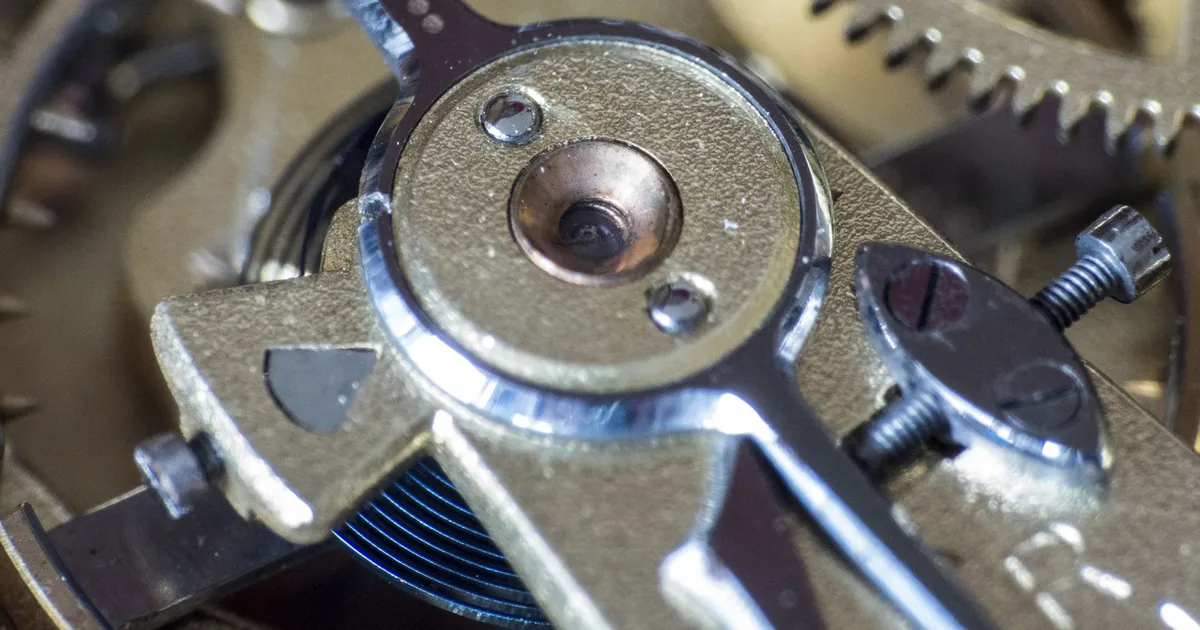
Two alloys carry the word “invariable” in their name, and they solve different problems. Invar keeps its length from changing as the temperature moves. Elinvar and its relatives keep their stiffness from changing. Anyone buying precision metal parts for an instrument needs to know which one fits the job, because a part that is stable in length can still drift in stiffness and the other way round. This guide explains the difference and the choice between them.
Two kinds of stability
A metal part can change with temperature in two separate ways.
- Its size changes. The metal expands or shrinks. This is measured by the CTE.
- Its stiffness changes. The metal gets softer as it warms, a little for most metals. This is measured by the temperature coefficient of the elastic modulus, also called the thermoelastic coefficient.
Most metals have a CTE of 10 to 20 ×10⁻⁶ per K and a modulus that falls by about 200 to 400 parts per million per kelvin as temperature rises. Invar fixes the first number. Elinvar fixes the second. Neither fixes both.
| Property | Invar 36 | Elinvar type alloy | Typical steel |
|---|---|---|---|
| CTE near room temperature | about 1.3 ×10⁻⁶ per K | roughly 7 to 8 ×10⁻⁶ per K | about 11 to 12 ×10⁻⁶ per K |
| Modulus change with temperature | Small but not tuned | Near zero by design | About −200 to −300 ppm per K |
| Main job | Hold length | Hold stiffness | General structure |
| Typical use | Frames, benches, scales, tooling | Hairsprings, resonators, precision springs | Everything else |
Typical values for comparison only. Confirm with the producer’s datasheet for the exact grade.
Where Elinvar and constant-modulus alloys are used
Stiffness matters wherever a part vibrates or acts as a spring. The frequency of a vibrating element depends on the square root of its stiffness, so a modulus that changes with temperature changes the frequency.
- Watch hairsprings. A balance spring sets the beat of a mechanical watch. With ordinary steel the stiffness change with temperature would shift the rate by many seconds per day for each degree of temperature change.
- Tuning forks and resonators. Reference frequencies for instruments and filters use constant-modulus alloys so the pitch holds across a normal temperature range.
- Precision springs and diaphragms. Force gauges, pressure sensors and balances use them to keep their calibration across the day.
- Vibrating reed and mechanical filter devices in older electronic equipment.
Common producer grades include Elinvar itself, Ni-Span-C type alloys and watch-specific variants from Swiss makers. The grades differ in composition and in their heat treatments, so a buyer should name the grade or the specification, not just “Elinvar”.
Where Invar is the right choice
Length matters wherever a part is a reference or sets a distance. Optical benches, metrology scales, telescope structures, CMM calibration bars and mold tooling all want constant length. Their stiffness may drift a little with temperature, but the part does not move. The details are in Invar 36 CTE versus temperature, and Super Invar pushes further, as covered in Super Invar when Invar 36 is not enough.
A rule of thumb for the choice:
| If the part is… | Choose | Reason |
|---|---|---|
| A frame, base or reference bar | Invar 36 or Super Invar | Length must not change |
| A spring, hairspring or flexure that sets a force or frequency | Constant-modulus alloy | Stiffness must not change |
| A flexure inside an Invar frame | Often Invar itself, sometimes a constant-modulus alloy | Match the frame, or hold the spring rate |
| Both a frame and a spring in one assembly | Two alloys, one for each job | No single metal does both |
Why you cannot use one for the other’s job
The two families have opposite weaknesses. Elinvar grows about six times as much as Invar near room temperature, so a frame made from it drifts with temperature. Invar has no tuned modulus, and its stiffness varies as an ordinary metal does, so a spring made from it changes its force with temperature.
Take a flexure that deflects 1 mm under a fixed load. If the modulus changes by 250 ppm per K, a 10 K change shifts the deflection by about 2.5 µm for a steel flexure. A constant-modulus alloy brings that down to a few hundredths of a micrometer. For a frame 500 mm long, the difference in CTE between Invar and an Elinvar type alloy is about 6 ×10⁻⁶ per K, so a 10 K change gives about 30 µm of extra growth in the Elinvar frame. Each material is the wrong choice for the other job by a large margin.
Machining and heat treatment
Both families are nickel-iron based and share the same machining character: soft, gummy, work hardening and poor at carrying heat away from the cut. The cutting advice for Invar in Invar 36 machining parameters applies with small changes. The differences are in the heat treatment.
- Invar is stress relieved and stabilized to hold its size after machining, as described in Invar stress relief in machining.
- Precipitation hardening constant-modulus alloys such as the Ni-Span-C type are machined in the annealed or cold worked condition and then aged at a set temperature to develop strength and tune the thermoelastic coefficient. The aging cycle is part of the specification and cannot be skipped or changed without changing the spring rate.
- Cold worked grades for hairsprings are drawn and rolled to a hardness that sets the spring behavior, and heat treatment must be gentle to avoid disturbing it.
Parts can change size slightly during aging, often a few micrometers, so critical features are finished after the aging step or allowed for in the stock.
How the stiffness behavior is measured and specified
Constant-modulus alloys are specified by a number most buyers have not met before, the thermoelastic coefficient, sometimes written as the temperature coefficient of Young’s modulus or of frequency. It is the fractional change of stiffness per kelvin, quoted in parts per million per kelvin. Steel sits around negative 200 to 300 ppm per K. A good constant-modulus alloy is tuned to land close to zero over a stated range, typically room temperature to a few tens of degrees above it.
The figure is measured by exciting a small sample of the alloy in resonance and tracking its frequency while the temperature changes. Because frequency depends on the square root of stiffness, the frequency drift is half the stiffness drift. The test method is more specialized than a dilatometer run, and it is usually done on a strip or a wire taken from the same heat. For a certificate, ask for the range, the sample form and the measured coefficient, not just a statement that the heat “meets the grade”.
Two cautions apply. First, the coefficient depends on the heat treatment: the same coil of strip can read quite differently before and after aging. Second, it depends on cold work, so a spring formed after the test can differ from the sample. A drawing for a spring should state the heat treatment and the order of forming and aging, and ask for the test to be run on a sample processed the same way.
Other differences that affect design
- Magnetism. Invar 36 is ferromagnetic at room temperature and loses its magnetism above its Curie temperature of roughly 230 °C. Magnetic response differs by grade, and some chromium bearing constant-modulus alloys are only weakly magnetic. If the part sits near a sensor or in an instrument with a magnetic field, check the grade. See magnetic properties of Invar and machining.
- Corrosion. Chromium bearing grades resist corrosion better than Invar, which can rust in damp air. Both usually get a surface treatment for storage.
- Strength. Aged constant-modulus alloys are much stronger than annealed Invar and take higher spring stress. Invar is soft and yields at low stress, which limits its use as a spring.
- Damping. Some of these alloys have low internal friction, which matters for a resonator that must ring for a long time.
A design that needs a strong spring inside a stable frame often combines an aged constant-modulus spring with an Invar frame, with a flexure or clamp joint that tolerates the CTE difference.
Supply and lead time
Invar 36 is stocked by many mills and distributors in bar, plate and sheet. Constant-modulus alloys are a more specialized product. Watch grades come in fine wire and thin strip from a few producers, and the general purpose Ni-Span-C type is made in strip, wire and bar in limited sizes. A small order may have to wait for a mill run or a minimum lot.
| Alloy family | Common forms | Planning note |
|---|---|---|
| Invar 36 | Bar, plate, sheet, wire | Stock sizes ship fast, see the Invar material sourcing guide |
| Super Invar | Bar, plate, sheet | Limited stock, allow more lead time |
| Constant-modulus, precipitation hardening | Strip, wire, some bar | Check minimum lot and temper before releasing the drawing |
| Watch grades | Fine wire, thin strip | Specialist producers, small lots possible |
Typical supply picture. Ask the shop what it can source.
Because the choice between the two families is made at design time, check availability before committing the drawing to a specific grade. A design that fixes the spring thickness to a size the mill does not make wastes weeks.
Hypothetical worked example
A buyer designs a force sensor in which a thin beam deflects against a fixed Invar base. The base must hold length, and the beam must hold stiffness. Numbers are hypothetical.
- The base is a 100 mm Invar 36 block. A 5 K temperature swing changes its length by about 0.65 µm.
- The beam is a 0.3 mm thick spring. If made of steel, a 5 K swing changes its stiffness by about 0.1 percent, enough to shift the force reading by 0.1 percent.
- If made of a constant-modulus alloy, the swing changes stiffness by only a few hundredths of a percent.
- The beam’s CTE no longer matters much, because it is short and free to expand.
The design uses two alloys, each for the job it does best. The Invar base and the Ni-Span-C type beam are joined by a bolted or clamped joint, designed with the expansion difference in mind, which joining Invar to other metals addresses.
What to put in the RFQ
- Which stability matters: length, stiffness or both
- The temperature range and the allowed drift in either property
- The alloy grade and specification, or the performance target if the grade is open
- The heat treatment, including aging time and temperature for hardening grades
- Any sealing or vacuum requirements that limit the choice
Send the drawing through the RFQ form with the stability requirement stated, and we match you with shops that cut nickel-iron alloys and can say which grade they have worked with. See the Invar reference data for typical values, the Invar 36 machining page for the alloy itself and Invar versus Allvar alloys for another low-expansion comparison.
Frequently asked questions
What does Elinvar mean?
The name comes from the French for invariable elasticity. Elinvar is an iron-nickel-chromium alloy developed so that its elastic modulus, the stiffness of the metal, stays nearly constant as temperature changes. Invar, from invariable, was named for the near constant length of its sister alloy, which has a very different purpose.
Can I use Elinvar instead of Invar for a stable frame?
No. Elinvar and similar constant-modulus alloys expand roughly six times as much as Invar 36 near room temperature, so a frame made of them grows with temperature. They suit springs, hairsprings, tuning forks and resonators where stiffness drift matters. A frame that must hold its length across temperature should use Invar or Super Invar.
Are constant-modulus alloys harder to machine than Invar?
They are similar nickel-iron alloys that cut with the same care for sharp tools, light passes and heat control. Precipitation hardening grades add a step: parts are usually machined in the soft, annealed condition and aged afterward to develop strength and set the thermoelastic behavior, which can move the part by a few micrometers.
Reviewed against
Values in this guide are typical handbook figures for planning. The mill certificate for your heat lot and the shop's quote for your geometry govern.
Need a quote for this part?
Send the drawing. We match you with up to 3 shops that machine Invar and reply within 24 business hours.
Get matched with an Invar shopKeep reading
- Invar vs ALLVAR Alloys: Comparing Low-Expansion Metal Options · Materials
- How the CTE of Invar 36 Changes With Temperature and Condition · Materials
- Super Invar: The Lower CTE Option, Its Limits and How Shops Machine It · Materials
- Invar 36 vs Kovar vs Super Invar: Which Alloy for Your Part · Materials